Lasers instead of inclinometers alone: rethinking pulling tests
First post in a series on a laser-based pulling-test method. Peer-reviewed in Forests 2026, 17(5), 528 — Open Access.
Research notes on tree assessment and tomography
First post in a series on a laser-based pulling-test method. Peer-reviewed in Forests 2026, 17(5), 528 — Open Access.
We demonstrate a novel computational efficient method to classify tree species in LiDAR point clouds.
Our results can provide a wider scientific basis for the pulling test method. They help to validate risk assessments and studies based on static load tests and increase their credibility and acceptance, thereby contributing significantly to the efficacy of research experiments as well as to the prospects of conserving valuable trees.
The use of AI in tree risk assessment not only supports the user but can also be used to disseminate knowledge and promote the standardization of decision-making in tree assessment.
Precise sensor positions in tomography can be measured quickly.
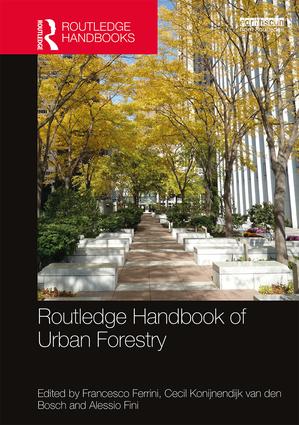
The new book “Routledge Handbook of Urban Forestry” will be publishd in April. Editors are Francesco Ferrini, Cecil C. Konijnendijk van den Bosch and Alessio Fini, the chapter “Tools for Tree Risk Assessment”) was written by Prof. Steffen Rust and Philip van Wassenaer.
More can be found at Routledge.
Twig abcission (cladoptosis) in oak is not directly related to drought stress.
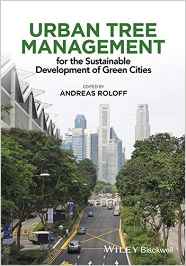
The new book “Urban Tree Management” will be publishd end of January. The editor is Prof. Andreas Roloff, two chapters (“Hazard tree management” and “Tree maintenance”) have been written by Prof. Steffen Rust.
More can be found at Wiley.